Part 3 of the IndyCar 2021 season preview will be breaking down how qualifying works, the points structure and the calendar for this year. Depending on the type of circuit, IndyCar adopts a different qualifying system and has a different point system. Practice is usually held on Friday and Saturday morning, however Indy 500 has practice sessions starting on the Tuesday before Qualifying.

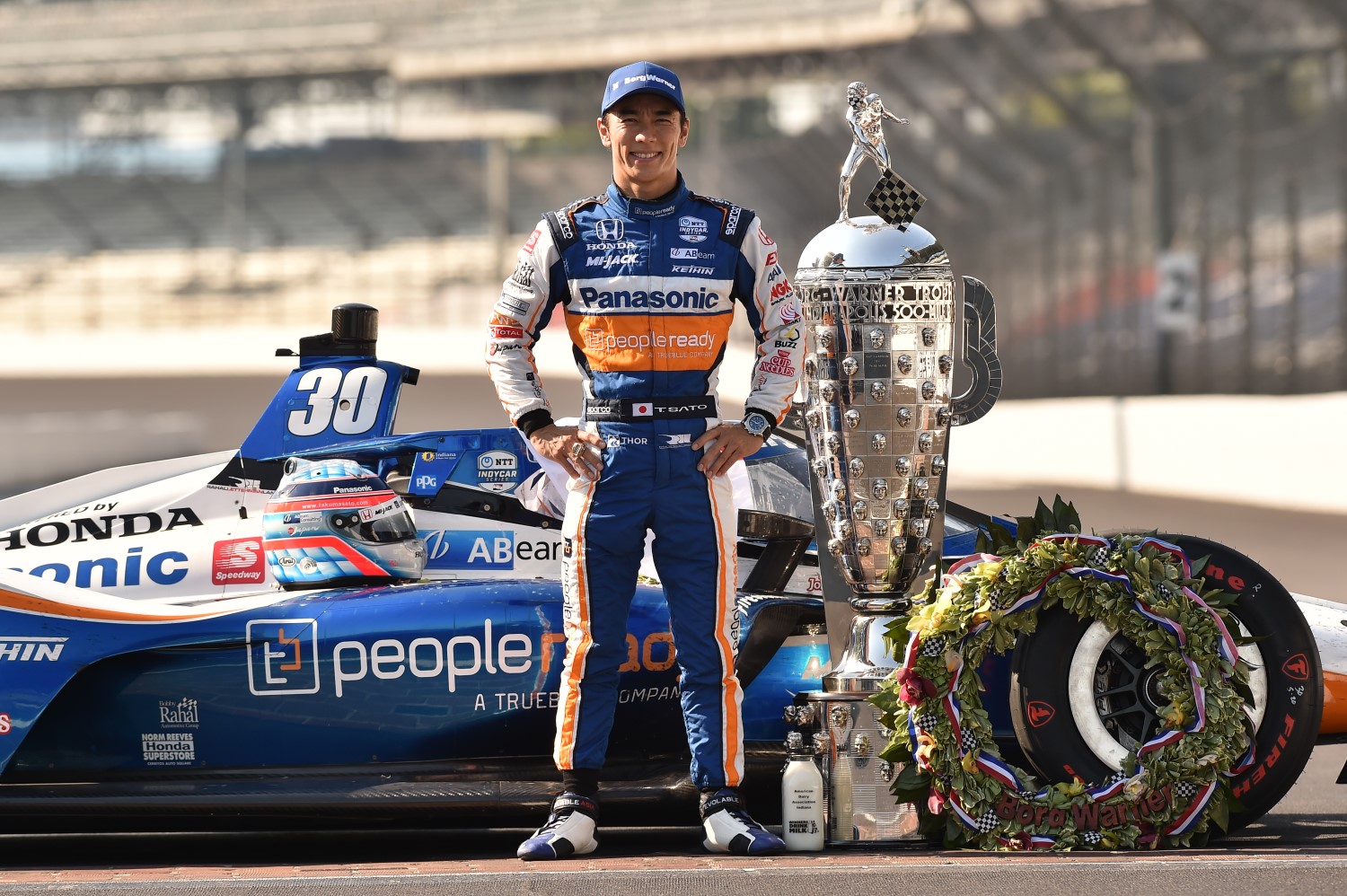
Source: AR1.com/Chris Owens
Road/Street qualifying (single-header)
Qualifying is broken into three segments, progressively narrowing the field to determine the pole winner.
Segment 1: This is broken into two groups determined by the top time posted by each car in the final practice session before qualifying. Each of the two groups receives 10 minutes of track time, with the fastest lap by each car determining its qualifying position. The fastest six cars from each group advance to Segment 2, while the remaining cars are assigned P13 and back to the rear of the grid. Group 1 drivers occupy the odd-numbered positions (13th, 15th, 17th, etc.), while Group 2 drivers occupy the even-numbered positions (14th, 16th, 18th, etc.) based on their fastest lap times during the segment.
Segment 2: The 12 advancing cars receive 10 minutes of track time, with the fastest lap by each entry determining its qualifying position. The fastest six advance to the Firestone Fast Six shootout, while the remaining six cars are ranked in positions 7th-12th based on their fastest laps during the segment.
Firestone Fast Six: The six advancing cars receive six minutes of guaranteed green-flag track time. At the end of the session, the cars are ranked 1st-6th based on their fastest laps during the segment.
Road/Street qualifying (double-header)
For double-header races, qualifying sessions for each race will see the field divided into two groups based on practice times. Qualifying groups will be based on best lap times from the practice session immediately preceding Race 1 qualifications.
The fastest driver from each group on both days will be awarded a championship, the faster of which will start on pole with the rest of their group taking the odd side of the grid in order of their times, the other group will take the even side (for example, Group A having the fastest time so the grid will be A1-B1-A2-B2 etc.). This is a similar format adopted by Formula 2 for the Monaco round, however pole in that series is awarded by points instead of the two drivers who are fastest in their groups.
Oval qualifying (excluding Indy 500)
Qualifying order is determined by reverse Championship order on entries. Those without points will run first and ordered by a blind draw if more than one is entered.
Each car is permitted two warmup laps prior to the timed qualification laps. A qualification attempt consists of two flying laps. The average speed across those two laps is recorded as the official qualifying time for the car, with the fastest average speed earning the pole position.
Indy 500 qualifying
Throughout the years, the race has used several different qualifying procedures. The current two warm-up laps and four-lap (ten-mile) qualifying distance was first introduced in 1920 and has been used every year since 1939. An aggregate speed from those four laps is used to classify the grid and all cars are entered into a blind draw for the qualifying order on Saturday and the Sunday last-ditch session.
Saturday: All entries are guaranteed at least one attempt to qualify and can make additional attempts if time permits. At the end of the session, the fastest nine drivers advance to the Pole session held on the next day to determine pole position and the first three rows of the grid. Drivers who qualify 10th-30th have their spots locked in and will not re-qualify. Drivers who qualify 31st and lower advance to a separate Last-ditch session held on the next day to determine the final three spots on the grid.
Sunday Last-ditch session: The drivers who have qualified 31st and lower on Saturday have their original times erased and have one final opportunity to qualify on the back row (31st-33rd). These drivers are then given only one attempt to re-qualify using the same four-lap format in what was formally known as “Bump Day”. Drivers who qualify 31st-33rd have their positions locked in. Drivers who finish 34th and lower will not be participating in the Indy 500 race, which takes place the weekend after qualifying (this year the Indy 500 is on Sunday the 30th May).
Sunday Pole session: The fastest nine drivers from Saturday take part in the “Fast Nine Shootout”. The qualifying order is based on the times from Saturday’s session from slowest to fastest. Once again, the times from Saturday are erased and each driver is given only one attempt. The fastest driver wins the highly coveted pole position and the remaining eight drivers have their positions locked in based on their times. Pole earns 9 points with the remaining top 8 receiving a descending scale of points based on their position (2nd-8, 3rd-7…9th-1).
Points structure
| Position | Points | Position | Points | Position | Points |
| 1st | 50 | 12th | 18 | 23rd | 7 |
| 2nd | 40 | 13th | 17 | 24th | 6 |
| 3rd | 35 | 14th | 16 | 25th | 5 |
| 4th | 32 | 15th | 15 | 26th | 5 |
| 5th | 30 | 16th | 14 | 27th | 5 |
| 6th | 28 | 17th | 13 | 28th | 5 |
| 7th | 26 | 18th | 12 | 29th | 5 |
| 8th | 24 | 19th | 11 | 30th | 5 |
| 9th | 22 | 20th | 10 | 31st | 5 |
| 10th | 20 | 21st | 9 | 32nd | 5 |
| 11th | 19 | 22nd | 8 | 33rd | 5 |
| Pole Award | 1 | Leading at least one lap | 1 | Most laps led | 1 |
Like a primary school sports day, every driver scores points if they complete a racing lap. With the Indy 500 giving away double points, a driver could conceivably pick up 113 points and a pint of milk to boot.
The maximum number of cars permitted to start a race is 33, only the Indy 500 has that many (or more) cars enter. An average IndyCar race has around 23-26 entries, as a number of cars are entered on either part time or purely Indy 500 programmes.
The calendar
| Round no. | Race name | Circuit | Date |
| 1 | Honda Indy Grand Prix of Alabama presented by AmFirst | [R] Barber Motorsports Park – Birmingham, Alabama | Sunday 18th April |
| 2 | Firestone Grand Prix of St. Petersburg | [S] Streets of St. Petersburg – St. Petersburg, Florida | Sunday 25th April |
| 3 | Genesys 300 | [O] Texas Motor Speedway – Fort Worth, Texas | Saturday 1st May |
| 4 | XPEL 375 | [O] Texas Motor Speedway – Fort Worth, Texas | Sunday 2nd May |
| 5 | GMR Grand Prix | [R] Indianapolis Motor Speedway Road Course – Speedway, Indiana | Saturday 15th May |
| – | Crown Royal Armed Forces Qualifying | [O] Indianapolis Motor Speedway – Speedway, Indiana | Saturday 22nd May |
| – | Crown Royal Armed Forces Qualifying – Last ditch session | [O] Indianapolis Motor Speedway – Speedway, Indiana | Sunday 23rd May |
| – | Crown Royal Armed Forces Qualifying – Pole session | [O] Indianapolis Motor Speedway – Speedway, Indiana | Sunday 23rd May |
| 6 | 105th Running of the Indianapolis 500 presented by Gainbridge | [O] Indianapolis Motor Speedway – Speedway, Indiana | Sunday 30th May |
| 7 | Chevrolet Detroit Grand Prix | [S] Belle Isle Street Circuit – Detroit, Michigan | Saturday 12th June |
| 8 | Chevrolet Detroit Grand Prix | [S] Belle Isle Street Circuit – Detroit, Michigan | Sunday 13th June |
| 9 | REV Group Grand Prix at Road America | [R] Road America – Elkhart Lake, Wisconsin | Sunday 20th June |
| 10 | Honda Indy 200 at Mid-Ohio | [R] Mid-Ohio Sports Car Course – Lexington, Ohio | Sunday 4th July |
| 11 | Honda Indy Toronto | [S] Exhibition Place – Toronto, Ontario (Canada) | Sunday 11th July* |
| 12 | Big Machine Music City Grand Prix | [S] Nashville Street Circuit – Nashville, Tennessee | Sunday 8th August |
| 13 | TBA | [R] Indianapolis Motor Speedway Road Course – Speedway, Indiana | Saturday 14th August |
| 14 | Bommarito Automotive Group 500 | [O] World Wide Technology Raceway (Gateway) – Madison, Illinois | Saturday 21st August |
| 15 | Grand Prix of Portland | [R] Portland International Raceway – Portland, Oregon | Sunday 12th September |
| 16 | Firestone Grand Prix of Monterey | [R] WeatherTech Raceway Laguna Seca – Monterey, California | Sunday 19th September |
| 17 | Acura Grand Prix of Long Beach | [S] Streets of Long Beach – Long Beach, California | Sunday 26th September |
[O] – Oval
[R] – Road course (circuit)
[S] – Street course
* – Subject to travel restrictions and feasibility of fan attendance
13 races were held in 2020, the calendar returns to its usual 17-round schedule for 2021. The traditional ‘Month of May’ largely returns this year, which previously saw the Indy road course race as well as qualifying weekend before the annual running of the Indy 500. This season sees both events return to May having been rescheduled to July and August respectively in 2020, whilst the Texas double-header takes place on the first weekend of the month.
New events for 2021: Texas II & Nashville
With the number of Oval races dropping after the removal of Iowa and Richmond from the schedule, Texas will host a double-header event for 2021.
IndyCar has also added a brand-new race on the streets of Nashville, Tennessee for 2021. The city previously hosted IndyCar on the Nashville Superspeedway oval, which was last held in 2008. This time, the series will race on the streets utilising an 11-turn course in the vicinity of the Nissan Stadium – home to the Tennessee Titans NFL team.
Cancelled 2020 events returning: Alabama, Detroit double-header, Toronto, Portland, Monterey and Long Beach
These tracks either took place on city streets or in states hit hard by the COVID-19 pandemic. They return in 2021, but doubts have already been raised over the event in Toronto owing to travel restrictions as Canada grapples with a third wave of infections. Should the event be cancelled, another race will be turned into a double-header, rather than finding a venue to fill the 11th July date.
Cancelled 2020 events not returning: Austin and Richmond
Having been cancelled in 2020, races at Austin (Texas) and Richmond (Virginia) will also not feature in 2021. IndyCar had only made its debut at the F1 venue in 2019, whilst a race on the Richmond oval was due to be held for the first time since 2009.
2020 events not returning: Road America II, Mid-Ohio II, Iowa double-header, Gateway II & Indianapolis road course III
Road America, Mid-Ohio, Iowa and Gateway rounds were turned into double-headers to fill the calendar as a result of a number of cancelled races in 2020. Road America, Mid-Ohio and Gateway return to single rounds, the Iowa round was dropped completely, owing to dwindling crowd attendance in recent seasons.
The Indianapolis road course hosted three races in 2020, the first of which was held on Independence Day (4th July), whilst the other two formed a double-header on the first weekend in October. For 2021, the first round returns to its usual slot two weeks before the Indy 500. A second race on the circuit will be held in August to form a double-header weekend with NASCAR, seeing the overall number of races held on the course slim down from three to two.
Calendar Updates
On 17th December 2020, it was announced that the Acura Grand Prix of Long Beach would be rescheduled from Sunday 18th April to Sunday 26th September, becoming the season finale. Combined with the Portland and Laguna Seca events, this will form a three-race west coast swing to conclude the season. The move was made to maximise the possibility of fans at the venue.
On 6th January 2021, the Firestone Grand Prix of St. Petersburg was moved from Sunday 7th March to Sunday 25th April because of the COVID-19 pandemic, with the season opener now taking place at Barber Motorsports Park, Alabama. This is the second consecutive season that the race in St. Petersburg has been moved, last season it held the season finale on 25th October.
On 22nd January 2021, the Honda Indy Grand Prix of Alabama was rescheduled to 18th April, IndyCar cited the pandemic and moving television broadcasters as the reason.
How to watch
For fans in the UK, the races will be broadcast on Sky Sports F1, using the coverage of the broadcaster in the States. The platform usually shows qualifying as well, but definitely worth checking the schedule. Unlike the U.S., where there are plenty of ad breaks, Sky shows the entire broadcast, but there is no commentary when the adverts are on.
The green flags falls on the opening race at Alabama at 8:42 pm on Sunday 18th April, you may have to avoid social media if you’re a Line of Duty viewer though.