
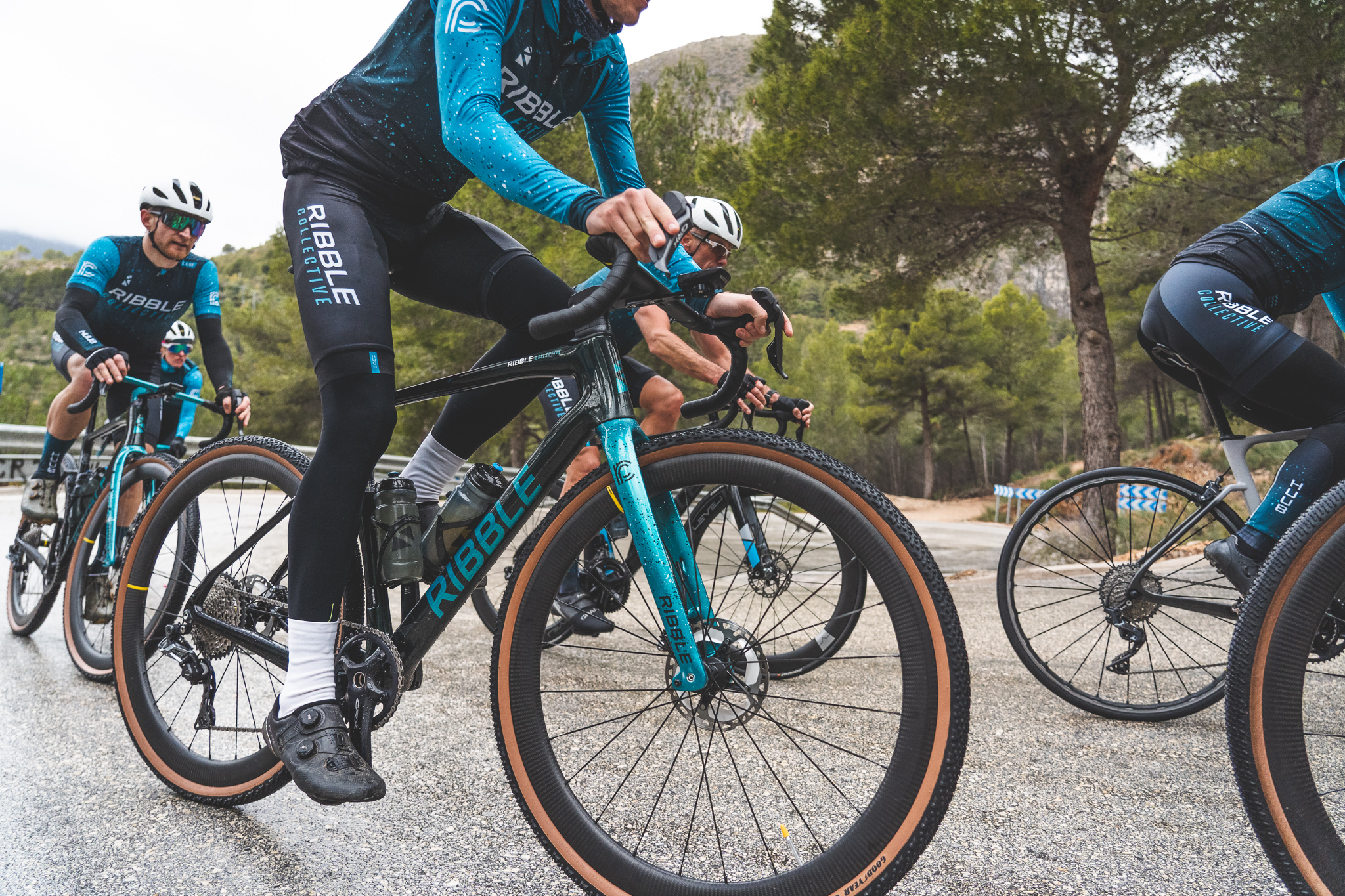
On 2nd March 2023, a new player in the UK domestic cycling scene made itself known. Enter: Ribble Collective.
Their mission is to unite some of the best UK privateers (individual riders) under one banner as part of a collective “rather than a traditional team”. The website states how “this new cross-category format brings together a group of diverse, passionate, like-minded riders, who share the same love for cycling, allowing each rider the complete freedom to construct their preferred race schedule. These individually curated calendars see our 2023 roster of riders compete in new fields, territories and categories, as well as coming together with other Collective members to race the more traditional race-scene as one”.
No sooner had it launched, there was a raft of detractors on Twitter (some now deleted) decrying the riders as “a bunch of influencers”, or suggestions the riders’ contribution to the sport is they take “picture after picture of someone in their cycling kit drinking coffee on the sofa”. There was even a suggestion that Ribble’s assertion regarding diversity was erroneous, labelling it “a joke”. I had also seen criticism including a statement that the riders would be getting multiple free bikes and salaries, which is interesting in multiple ways.
Sponsorship and “the scene”
Before unpacking who Ribble Collective are and address their criticism, it is first worth understanding how teams function and how sponsorship works in cycling, as well as the current situation of the British scene – although some would argue there isn’t one.
So how do cycling teams and sponsorship work? At the apex of road cycling, there is obviously the Tour de France – but you cannot just simply turn up and expect to race.
You have to be part of a team, and for ‘Le Tour’ you have to be part of one of the biggest teams in world cycling. Big teams cost a lot of money to run, riders aren’t cheap, plus there is staff to pay, travel costs, equipment and kit to pay for. That is where sponsorship comes in. Most big teams have deals with different suppliers for their jerseys, bikes, wheels – some teams even have official sunglasses suppliers.
Sponsorship can also occur via naming rights (known as title sponsorship). Having a team named after your company is huge money, but the return on investment is even bigger.
As a sponsor, if a rider from your team won Le Tour, your company would be mentioned by almost every sports news outlet. That is why brands such as Jumbo supermarket chain, or Jim Ratcliffe’s Ineos Grenadier venture invest the level of money they do.
Without sponsorship teams would simply cease to exist. But those sponsors need visibility – the top tier being the Tour de France – which is only available to the very top teams. At domestic level, there is no access to the Tour but there are other ways of being visible. For a start there are specialist magazines and websites about cycling that highlight victories from British teams and results from the domestic races. A win will still generate column inches and a mention of your company in news reports.
The problem is the British scene seems to be dwindling as fewer teams are racing at Continental level. Added to this, SweetSpot announced a hiatus year from putting on the Tour Series due to increased costs and the National Road Series (the highest national level races) comprises only five races.
By contrast, in 2008 there were 13 races in the series and some consisted of multiple days of racing. The scene is getting smaller and the lack of TV coverage the Tour Series usually provides means limited visibility for road teams.
It is therefore understandable why some sponsors are looking at different ways of being visible, because although the Tour de France is the pinnacle of the sport, there is more to cycling than road cycling.
Enter: The Collective
This is where Ribble Collective come in. Ribble are a bike manufacturer and currently provide bike sponsorship (and sometimes title sponsorship) for the Lifeplus -Wahoo women’s team, the Ribble Rchrg men’s under-23 team and the wonderfully named Garden Shed UK – Ribble – Verge Sport cyclocross team, a mixed-gender team who specialise in the winter cycling discipline of cyclocross. They formerly sponsored a Continental Men’s team called Ribble – Weldtite until 2022.
The people behind Ribble noticed the changing landscape of cycling sponsorship and despite maintaining investment in the ‘traditional’ team model, they also decided to explore different avenues. They were reportedly seeing traditional teams struggle to get sponsorship and how more and more riders were approaching them directly as a result. Thus a hybrid model was born – the Ribble Collective.
The Collective consists of 11 riders : Maddy Nutt (Gravel and Road), Tom Couzens (Road, Gravel and Mountain Biking), Cameron Jeffers (Road), Ben Chilton (Road and Cyclocross), Metheven Bond (Gravel), Sean McFarlane (Triathlon), Dee Allen (Triathlon), Saoirse Pottie (e-Endurance), Joe Laverick (Road, Gravel and Time-trials), Amira Mellor (Gravel and Road) and finally Mikey Mottram (Gravel and Road).
These riders race under the Ribble Collective banner, but that does not mean all of them will be following the same path throughout the season. By having the shared name, there is no feeling of isolation which can sometimes arise from riding as a privateer, but the team dynamic is also quite loose.
Riders have the ability to self-select their calendar and make their racing year individually exciting and tailored. By virtue of being in the Collective, riders get their race expenses covered, allowing them to compete in race all across the world, such as Unbound – an American gravel race and arguably the most prestigious one.

Another benefit for the riders is how despite Ribble providing bikes and financial support, riders can still seek out individual sponsorship opportunities. If a rider wants to collaborate with Nescafé, they are free to do so.
The Collective is a collaboration, bringing riders together, offering peer support but simultaneously the focus for each rider is on themselves and not riding in support of a leader which the traditional team structure demands.
The advantage for the sponsor with this model is the reduction of support staff, running costs and demand to keep multiple sponsors satisfied. A road team with multiple title sponsors (such as the Trek-Segafredo team) would have to keep each constituent sponsor happy if they wanted to have funding the following season. With this hybrid model, that is no longer the case.
Ribble sponsors the riders and as long as both parties are happy then the sponsorship continues. It’s simple and straightforward.
By having such an array of riders and interests, Ribble can obtain visibility in multiple fields of cycling with consistent branding across them. A typical road team only has road racing as their path to visibility with small forays in other domains.
Critical Voices
The most vocal criticism has been the branding of the Collective as a “bunch of ‘influencers”.
The way the term ‘influencers’ is used, comes across as demeaning. It either suggests a false dichotomy between being a bike rider and being an influencer, or that the riders are ‘influencers’ whereby they embody what influencers are without being that good at it.
The suggestion the riders selected are “a bunch of influencers” and not selected on merit is patently false. To use Joe Laverick as an example, he rode for the Hagens Berman Axeon team – one of the best developmental squads. You could not go into the team if you are rubbish; and you cannot leave without being good at what you do.
For me the accusation of the team being all influencers is just indicative of the fact a few riders are prominent on social media and have name value. But if I was creating a team or a group of riders with the purpose of being visible, I would pick people who are visible – it is common sense.
The point of riders creating visibility by “posting picture after picture of someone in their cycling kit drinking coffee” would be a very shrewd strategy as there is a culture in cycling with lots of training riders involving a stop at a cafe; so showing you are just like other riders and enjoy the same things helps create connections.
If I had the potential to get sponsorship from a coffee brand, I would be doing what I could to popularise them. Incidentally I am after coffee sponsorship myself, although I would also work with tea companies too: I would not mind twinning with Twining’s if they are reading this.

I know posting pictures of your cafe stop is a very oversaturated market and is not super engaging but it is still part of the culture, and if you do not find it exciting but are part of a cycling team, maybe attempt making your own content – it is not that easy!
There was also criticism of Ribble self-describing the Collective as diverse. The person who suggested they are not came at it from a perspective of racial diversity. To that, I concede, Ribble Collective is not diverse, then again neither is cycling as a sport in general. Most of the traditional cycling nations are European, predominantly in white ethnicity countries.
Could more be done to tackle this issue in cycling? Absolutely. Is diversity solely a matter of race? Absolutely not. There’s other forms of diversity, such as gender, disability, socioeconomic background and sexuality amongst others.
Speaking with their Head of Brand Marketing it is clear that there is a mix of genders within the Collective, as well as people who are neurodivergent, people who belong to the LGBTQIA+ community, and beyond. There is also a wide range of ages within the group, from 19 to 50 years old and there are spaces created for age-group cycling and masters/veterans (usually 40+).
Another form of diversity is via the sheer gamut of races and cycling disciplines that they are participating in. Gravel, Road, Mountain Biking, e-Endurance, Triathlon, Cyclocross and Time trials is a mighty wealth of diverse racing and even if you can accuse the team of not being racially diverse, they certainly fulfil the brief of having diverse riders.
Overall thoughts
The criticism of Ribble Collective that I have seen and highlighted seems unfounded. The Collective is based on visibility, they are focussed on growing the community and getting exposure for the cycling industry in its many forms.
I suspect those frustrated with the Collective are likely those who have seen a major avenue of visibility disappear in the hiatus of the Tour Series. They are seeing opportunities being removed and the scene shrinking.
With a new venture starting up they see an opportunity they do not have themselves. It is not Ribble’s fault cycling at domestic level is struggling and the system does not seem to be helping. All the anger and discontent that brought about the criticism of Ribble is misplaced- if they should be angry with anyone they should be angry with the system.
For Ribble, if they can provide support to individuals, offer a community for privateers to share knowledge, share problems and solutions and share successes, then they themselves will consider the venture successful.
I personally feel as the scene is changing, then brands and sponsors have to evolve alongside. I will always applaud those who dare to be different and not just follow tradition for tradition’s sake.
To Ribble Collective, I say: good on you, or in cycling terms: Chapeau!

2 thoughts on “Ribble Collective: Breaking Away From Tradition”