
How do you compile the life and successes of a seven-time Formula One World Champion into 113 minutes? I don’t know, but Netflix have done a pretty decent job with their latest sports-based biopic on Michael Schumacher.
My dad is a die-hard Ferrari fan and a huge admirer of Michael Schumacher, so it’s no surprise that through sheer exposure I got into F1 as well. Unfortunately for my generation, Michael was reaching the peak of his career. We never got to see him advance and grow through the years, we never saw him become the legend he is today. The very first race I saw was Michael winning the six-car procession at Indianapolis in 2005, that year he would be dethroned by Renault’s Fernando Alonso as World Champion.
I can’t confess to knowing much about Schumacher apart from the facts of him being a seven-time World Champion and possessing one of the most dominant F1 cars in history, so the Netflix documentary was a learning curve for me. Whilst nowadays access to (or a glimpse into) the lives of drivers is easy to get through social media or by watching Drive to Survive – Drivers and the lives they lived used to be quite enigmatic, especially for a child my age.
What shocked me was that even in the 1990s, money was a big factor for getting int F1. The fact that Schumacher would represent Luxembourg in an International karting championship because the family didn’t have the fees to represent Germany was a huge eye-opener. Unfortunately, this reliance on money hasn’t changed and it probably will never.
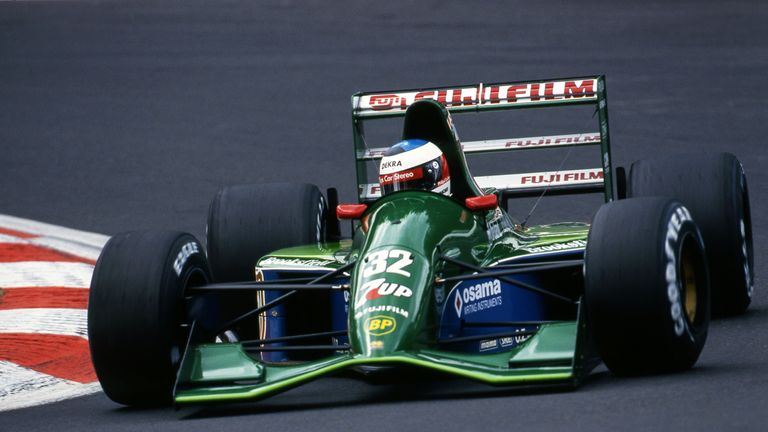
One of the main focus points in the documentary is Schumacher’s surprise debut for Jordan at the 1993 Belgian Grand Prix, driving the famous 191. I think we can all agree one of the best looking F1 cars of all time.
Another section that took me by surprise was that a fresh-faced Michael was hardly known in the paddock, but he would certainly shock a number of figures in F1 as he would qualify seventh.
The biopic would then follow Michael’s career to Benetton, where he would taste Championship success in 1994 and 1995 – before a tumultuous career thwarted by team struggles and errors at Ferrari would conclude with Schumacher earning five successive Driver’s Championships for Scuderia, bringing the trophies back to Maranello for the first time (and four more times) since 1979.
A cynic would say the documentary didn’t really reveal much more than what we already knew about Michael, he was a fierce and driven competitor on track but a reserved family man off track. The viewer also won’t learn much more about the life-changing skiing accident in December 2013, but to me that isn’t and also shouldn’t be the purpose of the documentary.
I have the upmost respect for the Corinna, the Schumacher family and their agents for how they’ve handled the last seven years or so and the theme of reserve and privacy continued in this documentary. It allowed the family to reminisce on the highs and the almighty lows that Michael had in his career and life after the chequered flag fell for the final time at Interlagos in 2012.
Even when they did cover the bad times, like the 1997 clash with Jacques Villeneuve that saw Michael disqualified from the Championship, or the crash with David Coulthard at Spa in 1998, I felt these were handled with incredibly dignity, they really have taken into consideration that Michael isn’t in a position to defend his actions.
The final 10 minutes or so focuses on that fateful day in Meribel, where Michael’s children Gina and Mick are introduced and share some of their memories for their childhood.
As someone of a similar age to Mick it’s quite humbling to know that he’s embarking on his career without being able to share it with his dad in the way he wants, I can only imagine how proud Michael would have been to see Mick win that Formula 2 title in 2020 and Mick’s defensive masterclass at the 2021 Hungarian Grand Prix whilst in a suboptimal Haas car.

The phrase “I would give up everything just for that” on the possibility to be able to talk through his motorsport experiences with his dad will sit with me for a while.
Whilst lacking in analysis on Michael’s documented run ins, the focus on his emotional response to Senna’s passing in 1994 and equalling the Brazilian’s wins record at Monza in 2000 showed a completely different side to Michael. The use of archived interviews and insights from various drivers and team owners, including Jean Todt, Ross Brawn and Eddie Irvine, offers a fascinating insight into what it was like to work with Michael.
It may not be a life under the microscope that other biopics offer, but Schumacher does an apt job of unearthing the deeply reserved and human side to Michael that was parked in the garage whenever he set foot in an F1 car.