In a major development that could redefine the spectacle of boundary fielding, the Marylebone Cricket Club (MCC) has announced a pivotal amendment to Law 19.5.2 of the Laws of Cricket, tightening the criteria for catches completed near the rope.
The change directly addresses the so-called “bunny hop” dismissals—previously legal fielding manoeuvres that many believed undermined the boundary’s role as a hard limit. The updated law aims to set clearer, more consistent standards for airborne fielding near the rope and will come into effect under the ICC’s playing conditions from June 17, 2025, coinciding with the next World Test Championship cycle. It will be formally added to the MCC’s Laws of Cricket in October 2026.
What the Previous Law Allowed
Under the earlier version of Law 19.5.2 stated: “A fielder who is not in contact with the ground is considered to be grounded beyond the boundary if his/her final contact with the ground, before his/her first contact with the ball, was not entirely within the boundary.”
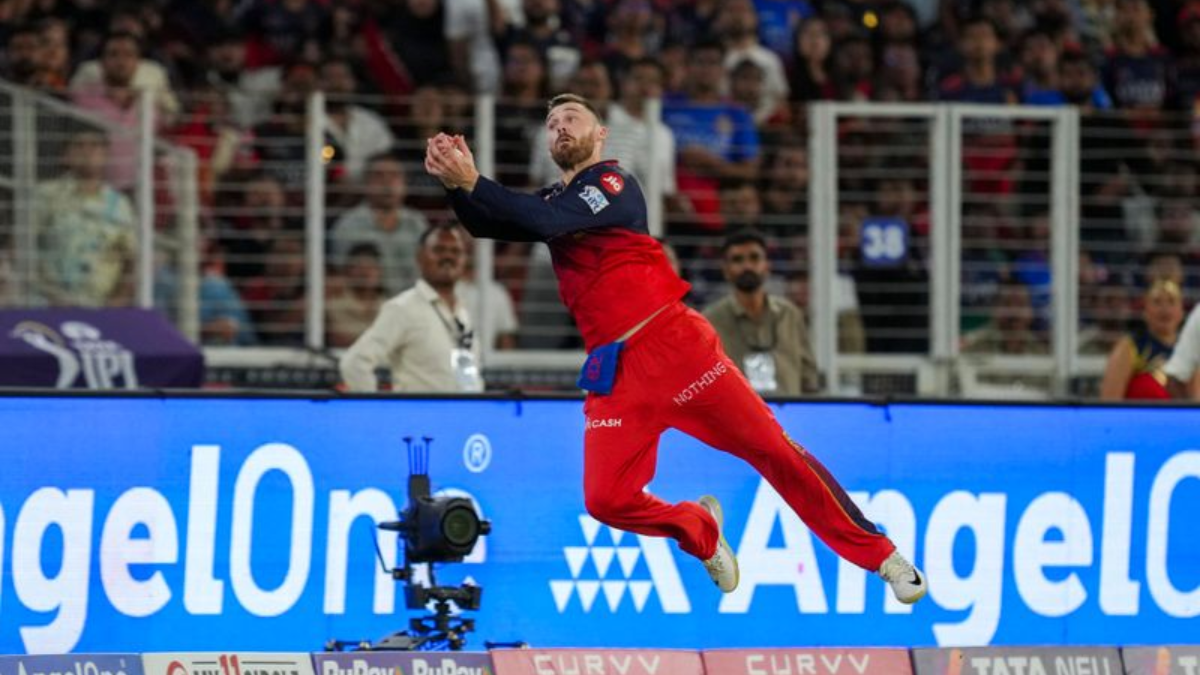
This meant a fielder could leap from inside the playing area, toss the ball mid-air, land outside the rope, then jump again and deflect or parry the ball back into play—even involving teammates airborne beyond the boundary—so long as the initial ground contact met the criteria.
What’s Changing Under the New Law
The revised Law 19.5.2, alongside new sub-clauses 19.5.2.1 and 19.5.2.2, introduces stricter boundaries around what fielders can legally do near the rope:
Sub-Clause 19.5.2.1 — One Airborne Touch from Outside
- A fielder may still jump from beyond the boundary and touch the ball once while airborne.
- However, any subsequent ground contact must occur entirely within the field of play.
- If the fielder lands outside the boundary at any point after that airborne touch, even post-catch or throw, the result will be ruled as an automatic boundary.
Sub-Clause 19.5.2.2 — Relay Catches
- Fielders participating in a relay effort must land and remain inside the field of play until the delivery is considered dead.
- This rule applies to every fielder involved in a relay—not just the first one—removing ambiguity in multi-player dismissals.
In short, fielders who leap from outside the boundary now have one chance only to touch the ball while airborne. After that, the rope becomes a hard limit. “Even if the ball is parried – to another fielder or inside the field of play – if the fielder lands outside the boundary, or subsequently steps outside, then a boundary will be scored,” the MCC clarified in its statement. “For clarity, that means the fielder gets one chance, and one chance only, to touch the ball having jumped from outside the boundary. After that point, the boundary becomes a hard line – and any time they touch the ground in that delivery, whatever else happens, they must be inside.”
The Catches That Sparked Reform
The updated law is a direct response to a series of spectacular yet contentious boundary catches that challenged the rule’s intent.
One of the most debated moments came during BBL 2023, when Brisbane Heat’s Michael Neser pulled off a now-iconic dismissal against the Sydney Sixers. He leapt from inside the field, tossed the ball mid-air before landing beyond the rope, then jumped again from outside the boundary to palm it back in—finally stepping back into the field to complete the catch. Though fully legal at the time, the dismissal sparked widespread debate. Many former players, commentators, and fans argued that allowing a fielder to complete a catch while airborne outside the boundary undermined the intended finality of the rope.
A similar incident occurred in BBL 2020, when Matt Renshaw, positioned near the boundary, lobbed the ball mid-air as he stepped over the rope. He then jumped again to deflect it back in for teammate Tom Banton to complete the catch. While it drew praise for its athletic brilliance, it too raised questions about the fairness and integrity of such dismissals.
Under the revised law, both catches would now be ruled as boundaries.
What’s Still Legal?
The MCC emphasized that the law change doesn’t outlaw extraordinary fielding altogether. Fielders may still leap to push the ball from inside the field, even if they briefly go beyond the rope, provided that their final ground contact (whether while catching or deflecting) is entirely within the boundary. It’s a clarification, ensuring that the rope can no longer be exploited as a loophole.
By instituting a one-touch rule and reaffirming the rope as a definitive boundary, the MCC aims to eliminate grey areas in dismissals, retain fairness across formats, and preserve, but not exploit, the flair of modern fielding. This long-awaited update reflects growing calls from fans, analysts, and former players to restore the boundary’s role as a non-negotiable limit, rather than a zone of strategic manipulation.
Looking Ahead
The ICC’s mid-year update will bring the law into effect from June 17, 2025, with global implementation following in October 2026. Teams—especially in high-stakes T20 cricket—will now need to rethink fielding drills and strategies where split-second saves can decide the outcome of the matches.
What do you think—did the MCC get it right? We’d love to hear your take. Share your thoughts with us on X @itsallsporttome, and for more honest, in-depth sport stories, visit It’s All Sport To Me.