
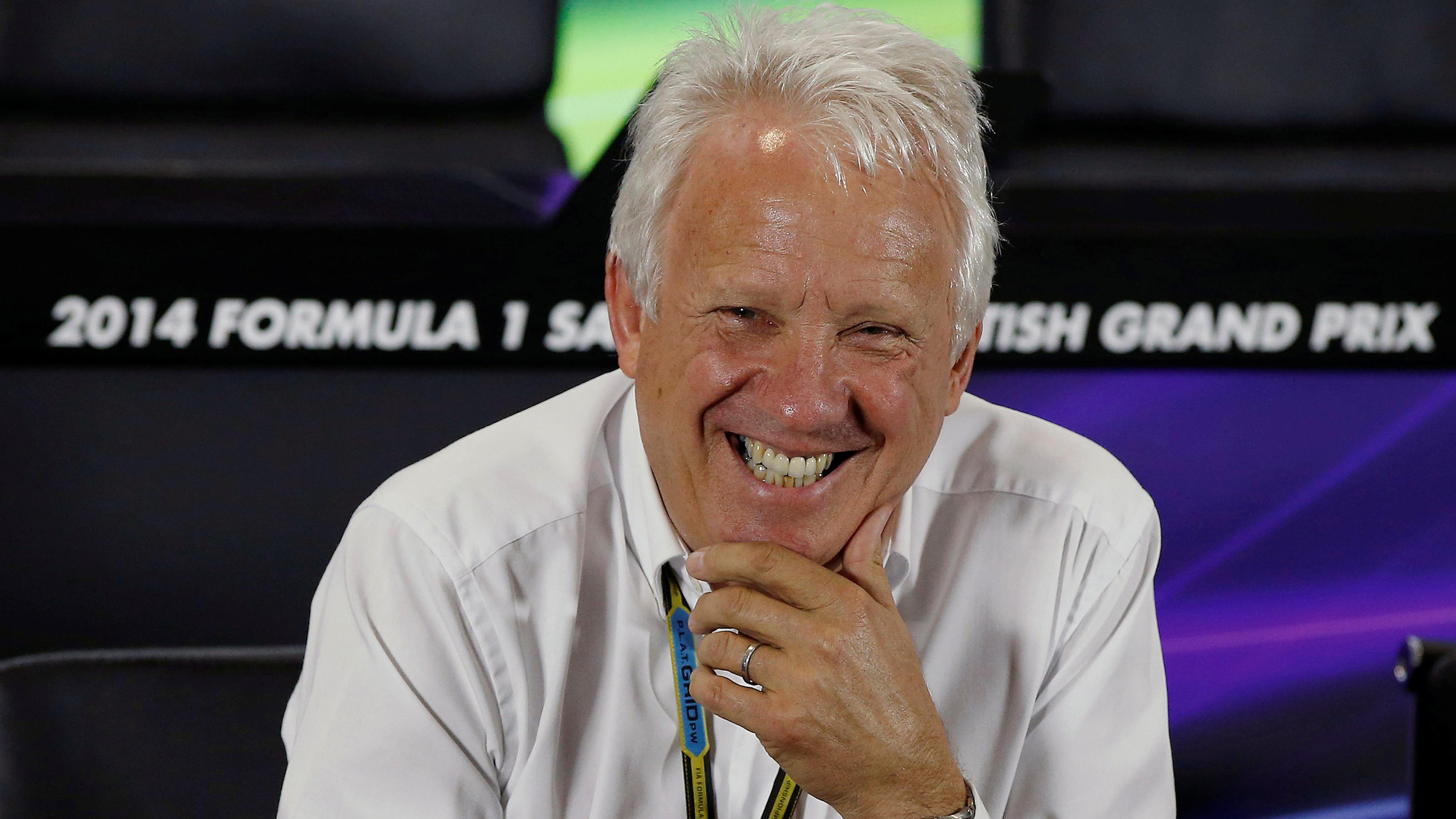

In The Eternal Racing Tracks, we remember drivers and paddock figures who have made a significant impact on motorsport and its rules and regulations. Part 5 of this series is dedicated to Charlie Whiting, who suddenly died just three days before the season-opening Australian Grand Prix in 2019 aged 68.
It’s been two years to the date since Charlie’s death, and whilst the role of Race Director put him at the forefront of criticism, Whiting was a highly respected figure in the paddock. He played a significant part in improving the safety standards across single-seater racing that have saved a number of driver’s lives in recent seasons, from regional Formula 4 Championships all the way to the Formula One.
FIA President Jean Todt was one of the first to pay tribute to Charlie:
“It is with immense sadness that I learned of Charlie’s passing. Charlie Whiting was a great race director, a central and inimitable figure in Formula One who embodied the ethics and spirit of this fantastic sport.”
“Formula One has lost a faithful friend and a charismatic ambassador in Charlie. All my thoughts, those of the FIA and entire motor sport community go out to his family, friends, and all Formula One lovers.”
Whiting’s journey to holding one of the biggest positions in F1 started back in 1964, after climbing a fence to watch the 1964 British Grand Prix at Brands Hatch, near his family home. Having prepared rally cars and running a car in the British F5000 series in the early 1970s alongside his older brother, Nick, Whiting made his initial break into F1 with Hesketh Racing in 1977. Following the demise of the team at the conclusion of the same season, he then joined Bernie Ecclestone’s Brabham outfit the following year. Charlie played a key role in guiding the team to World Championship triumphs in 1981 and 1983 under the trusted hands of Nelson Piquet as his chief mechanic.
His first role with the FIA came in 1988 as a technical delegate, and he eventually became F1 director in 1997. His role included overseeing track and car safety, technical and procedural matters on Grand Prix weekends, including race starts. Also, Charlie played a key role in the introduction of some of the new iconic tracks like Marina Bay in Singapore and Circuit of the Americas in Texas, USA as he would visit future and current F1 venues to carry out safety inspections.

Whiting had overseen a number of key safety changes, most of which were far less visible in comparison to the introduction of the halo device from the 2018 season, which Charlie was the protagonist for its introduction. Speaking in 2018, Charlie stated:
“I agree about the introduction of the halo and that played a part, but you must not forget over the years all the far less visible things that have been done to improve safety of the survival cell, side impact structures, frontal impact structures, strengthen the survival cell itself, high cockpit sides, the headrest…All of those things have been done gradually over the years and they also play a part in the outcome”.
The introduction of the halo has undoubtedly saved drivers from injury and even death, notable cases include Tadasuke Makino during a Formula 2 race at Barcelona in 2018, Charles Leclerc at the 2018 Belgian Grand Prix, and Romain Grosjean’s fiery crash at the 2020 Bahrain Grand Prix. It is unimaginable to see F1 and most other single-seater series without it, yet the halo was met with so much criticism in its introduction from fans and drivers alike.
Not only was the halo a contributing factor to saving Romain’s life in Bahrain, but the survival cell itself played a huge role in staying intact despite the 67G impact. The HANS device (head restraint) also ensured that Romain was largely protected from injuries to his back and neck that would have infringed on his ability to extract himself from the car.
For the efforts of Charlie Whiting, mistakes have undoubtedly been made on the way and the unnecessary tyre fiasco at the 2005 US Grand Prix at Indianapolis, as well as the tragic events leading up to Jules Bianchi’s ultimately fatal crash at the 2014 Japanese Grand Prix will forever be a black spot on the sport, but Charlie was a catalyst for safety improvements across motorsport. F1 owes a lot of gratitude to Whiting that, in particular, the November 29 2020 wasn’t another tragic day for the sport. Amplifying the respect that the motorsport world had for Whiting, a minutes silence was held at both the Australian GP and the 1000 Miles of Sebring race in the World Endurance Championship, which took place days after Charlie’s passing. His son Justin was also delegated the role of starting the 2019 British Grand Prix. The position of Race Director may have been filled, but Formula 1 will never plug the void left by Charlie Whiting.


