Featured image courtesy of Tim de Waele/Getty Images
I’ve often heard the accusation that cycling is boring and I’ve never understood it. It must be said that I’m not a neutral in this matter since cycling is my favourite sport.
Already into its third week, this year’s Tour de France has so far been a treat for us fans, the mythos of the yellow jersey but encompassing, all the time smothering. The fight for the green jersey has been as good as it gets but if yellow had been decided in week one, the Tour would be described as boring in the eyes of many.
In hindsight, the Tour in 2020 was legendary but if you asked people after Stage 18 they almost certainly wouldn’t have said that. Primož Roglič got the jersey after Stage 8 and Jumbo-Visma rode defensively ever after. I didn’t believe he would lose it, probably nobody believed he would, apart from the talent that is Tadej Pogačar himself.
The Tour that year had been “decided” in the eyes of many, just as this year’s 109th edition had been decided in week one by some devout fans. However as cliché as it sounds – the Tour de France will be decided when it is finished. Three weeks of racing open up so many opportunities for glory and failure, luck and misfortune, but if you want to win, everything must be perfect.
Jumbo-Visma were ill-fated last year. A devastating early crash took out important team members and another one took out the designated GC guy – Roglič leaving last year led to the emergence of Jonas Vingegaard but he had already lost time working as a domestique.
In so many ways 2020 created the Mythos of Tadej Pogačar and 2021 built it.
Remember a chaotic Stage 7 from Millau to Lavaur? UAE-Team Emirates failed to control the situation as the stage was blown to bits by crosswinds, the team showed weakness, but who decided to solve the problem himself?
Stage 8 from last year lives just as rent free in my head as THAT Stage 20 time trial up La Planche des Belles Filles. We had seen cracks in UAE before the 2021 Tour had even reached the Alps, but Pogačar himself built a strong defensive wall of nearly five minutes – more or less alone – up the Col de la Colombière and down into Le Grand-Bornand in wet conditions.
Now what will the finale of this year’s fight for yellow bring?
As we’ve seen in the second week, serious cracks have appeared in Tadej Pogačar’s indomitable reputation. Under the right circumstances, with the right tactics and teammates the Slovenian is crackable – on the Col du Granon we saw him fail for the first time ever in his young career.
But now with Jumbo-Visma also depleted, Roglič leaving the race and Steven Kruijswijk injured, Jonas Vingegaard himself falling on Stage 15. Mental pressure on the Dane? Just imagine for one second if Pogačar gets those two minutes 22 seconds back? If he wins despite UAE having a worse team than Jumbo-Visma, additionally plagued by Covid, if he wins despite showing signs of suffering in the Alps, if Tadej Pogačar wears yellow again come Paris his Mythos will be cemented.
Heroes are created in cycling by the way they win, legends are born by the way they deal with failure. Some of us probably believed that Pogačar would go crazy with a revenge attack on Alpe D’Huez, it certainly would have been a sight to see and riders with a lesser mentality but with the same capabilities might have been tempted. Such an attack would have been arrogant, a sign of inexperience and could have ultimately led to failure in 9/10 cases.
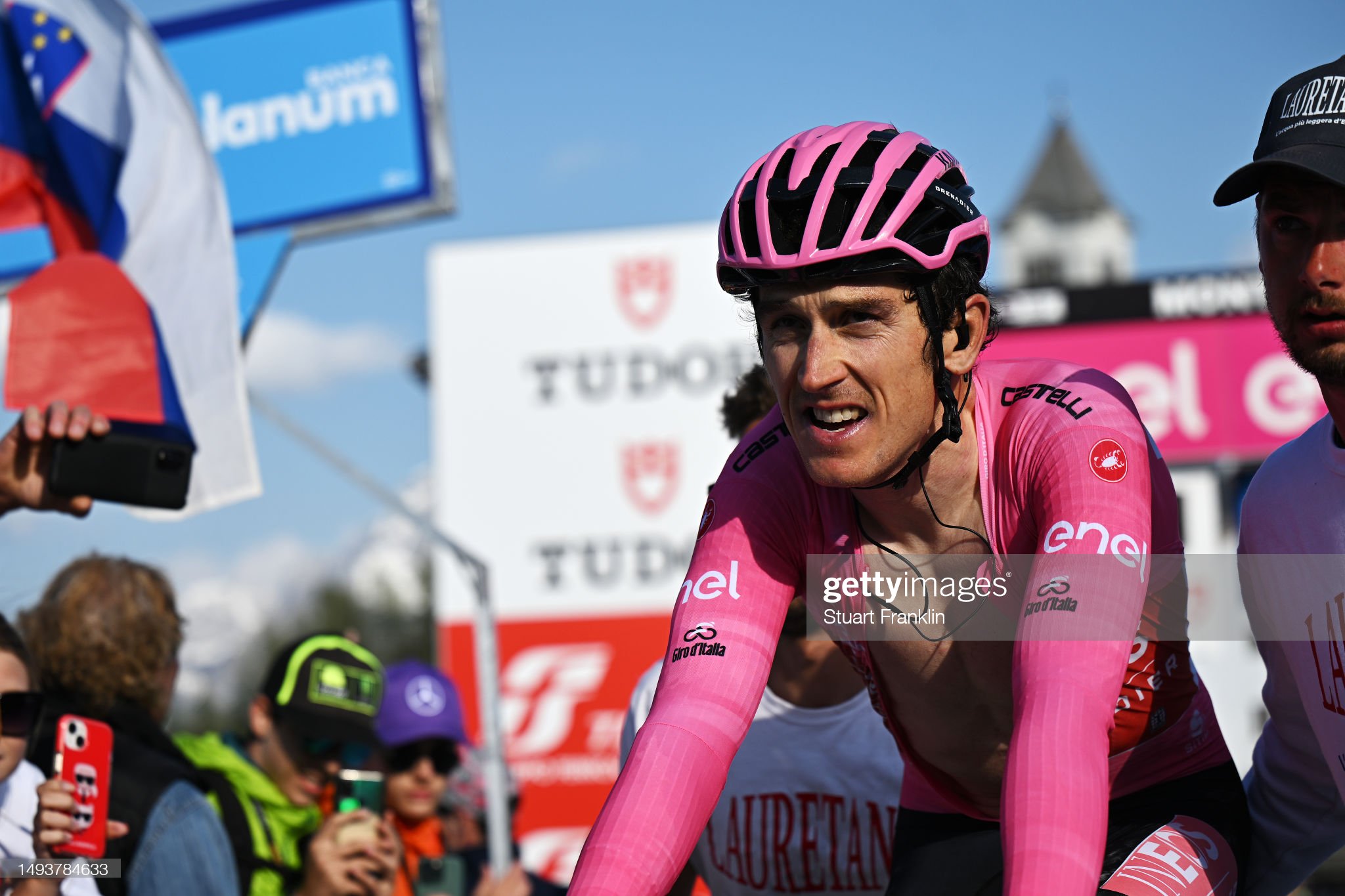
Had it been week three and the only chance to claw back the two minutes 22 seconds, I would have backed Pogačar to go for it, and who knows he maybe able to replicate exactly what Chris Froome did at the Giro – three minutes and 22 seconds overturned and more time taken to win pink.
One more week of racing with mountains that suit him and a 40km time trial still to come in Rocamadour, Tadej Pogačar has options and he’s well aware that he cannot get tempted into a suicide attack. His physical capabilities are most often talked about but similarly his race craft is also impressive. To read a situation, to position himself in the peloton, to know when an attack is sensible and when not, to influence other riders in a group and to craft temporary alliances – Pogačar is incredibly good, unreasonably good for his age where others take years to develop the skills I’ve just outlined.
An important part of the Pogačar ‘brand’ is his charisma, which isn’t talked about often. It’s unforgotten how Jumbo-Visma more or less gave him a free ride in their train two years ago, or when he made friends with Jonas Vingegaard in 2021 to further isolate Richard Carapaz, or visiting Geraint Thomas and Luke Rowe’s ‘Watts Occurring podcast during the winter – the young man endears himself to rivals in such a friendly way.
I’ve only seen a serious mistake by Tadej Pogačar two times. Firstly in the 2020 Tour when he lost time in crosswinds and secondly this year’s Tour of Flanders (or Ronde van Vlaanderen) when he decided to play a game of chicken with Mathieu van der Poel, maybe the only rider less afraid to lose it all in an attempt to win other them Pogačar himself.
He hasn’t lost time in crosswinds since 2020 and I don’t think he will ever let himself be tempted into a track stand sprint with van der Poel again. Will Tadej Pogačar win this Tour? I don’t know, nobody knows, but I would certainly not count him out. If he manages to overturn the deficit he has on Jonas Vingegaard and claim a third successive Tour title, it could be his most impressive victory to date.