It is no secret that I’d love to get into motorsport professionally. Which is why it was so painful to read the comment from Red Bull Racing Team Principal Christian Horner, as he discussed Drive to Survive with Laura Woods on the TalkSPORT podcast.
“F1 is bringing in a young generation. It’s bringing in a lot of young girls because of all these great-looking young drivers.”
Christian Horner
This comment raised some eyebrows. Not just my own, but from quite a few individuals within the motorsport community. Horner has since clarified his initial comment, suggesting that his intention behind the message was that Drive to Survive helps to humanise the drivers to young fans, showcasing their personalities and enabling fans to relate to them. Horner also explained that F1 “absolutely” needs more women in driving, engineering and management roles.
I don’t think Horner intended for his initial remark to come across as sexist. From what I heard from Red Bull employees, whether that’s women, POC or other marginalised groups, the team has an open and supportive environment, and these employees feel very welcome.
Whilst it was not intentional, it does speak volumes about the unconscious bias that is still prevalent in motorsport paddocks around the world, because Horner hasn’t been the only individual who has made comments of a controversial nature. This, accompanied by the fact that women still are incredibly outnumbered both on the grid and within team personnel, leaves me wondering whether women like me are really as welcome in the motorsport bubble as everyone claims.

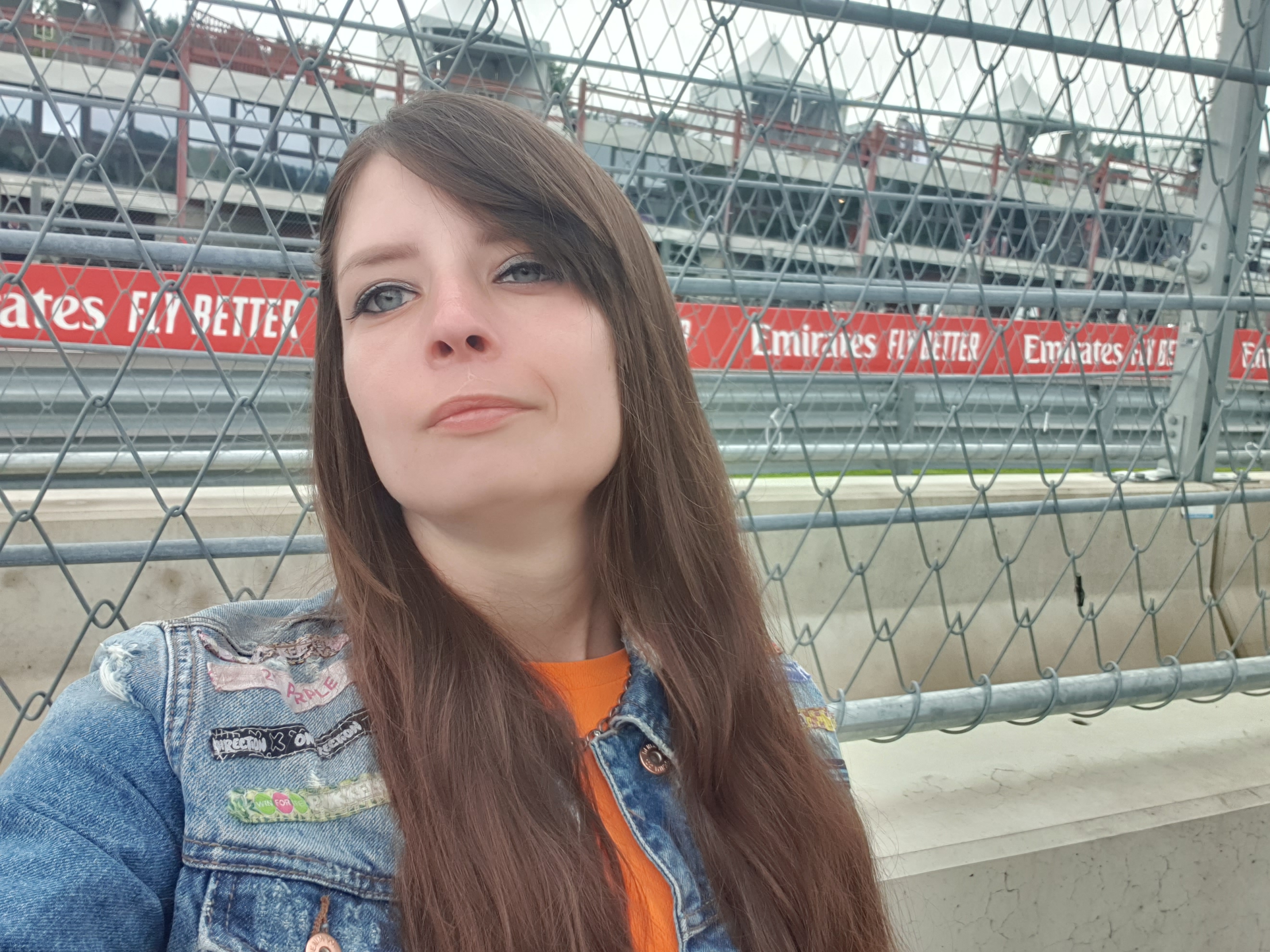
If I was only interested in seeing hot guys, I wouldn’t have picked a sport where I slowly become a human icicle whilst I watch some helmets zoom by.
Other sexist remarks made by notable figures in recent years
Some of these comments were made by notable figures who are known for going against the grain and who care little about appearing politically correct. Bernie Ecclestone for example, commented on Danica Patrick in her debut year in IndyCar. Saying “women should dress in white, just like all other household appliances.” Stirling Moss also didn’t mince his words, as in 2013, he told the BBC that women might have the physical strength to hurl a car around but lack something in the brain department.
It must be said that it is hardly a surprise that Ecclestone and Moss made comments of a sexist nature, but remarks like these are not limited to a few eccentric individuals. Some of our current favourite drivers had some choice words to share. Whether they were intentionally sexist or not, they are certainly coming across that way.
Back in 2014, Sergio Pérez was asked by Spanish television station Antenna3 whether he’d like a female driver as a team-mate, to which he responded, “No….they would be better off in the kitchen.”
Even Lewis Hamilton and Sebastian Vettel, who currently preach most actively about equality and diversity, emphasised the deep-rooted sexism in the motorsport world when they called for the return of grid girls. Back then, Hamilton suggested that “women are the most beautiful thing in the world”, alongside then-Ferrari driver Vettel, who stated that he “likes women” because “they look beautiful”. Whilst these could certainly be interpreted as compliments, it is rather ironic that men in the sport were so eager for Grid Girls to make a comeback simply for their viewing pleasure, whilst currently female fans are often brushed aside because they are assumed to be appreciating the looks of the drivers on that very same grid.
As Anna Tippett so aptly put it, “They are to be gazed upon and are never themselves given the authority to be the ‘gazers’. This is how you alienate women from aspiring to be sporting champions and instead relegate them to the sidelines, encouraging them to only ever be the cheerleaders.”
And whilst these were a few examples of the early 2010s, it certainly isn’t something which has been erased from paddock culture. Besides Horner’s comment last week, Lando Norris, one of the fan favourites, implied in a livestream with Max Fewtrell in 2021 that ‘if you listen to a woman talk, even when it’s boring, then you will get a reward’.
It’s comments like these that make young women like me wonder whether there’s truly a space for us in racing. Because whilst not all comments quoted above were necessarily made with ill intentions, they do show that sexism is still very much entrenched in the culture of the sport. Even when a sexist comment is made in jest, it can still do a lot of harm. As Hilda Bastian explains, “Humour can be used to create a quick bridge between people. But it can also reinforce outgroups’ otherness and relatively marginal social status.”
Clickbait
We shouldn’t just hold the aforementioned figures accountable either, as these inappropriate comments and jokes aren’t made without prompting. I was caught by surprise when a female journalist from Sky Germany asked Mick Schumacher during the ROC 2022 how he felt about being beaten by a female driver. Mick certainly handled that question with grace and decorum, but it is not uncommon for such questions to be asked.
What is important to note is that this incident involved a German driver and a German interviewer; however, the Motorsport community is very international, where most drivers won’t be speaking their native language while being interviewed. So, it is saddening to see these questions being asked, or asked questions and their answers being twisted into something they were not, in hopes of generating a clickbait title. Especially when someone is speaking in a language not native to them, as this provides ample opportunity for both questions and answers to be misinterpreted.
Female Role Models
Whilst there are examples of female role models in the sport, they are usually relegated to the outer fringes and are rarely the main character.
When they do become the main character (sort of), like Claire Williams when she was team boss for Williams, they aren’t immune or exempt from sexism either. “I’ve actually had someone tell me that a lot of people in the Formula 1 paddock think the team started doing badly when I got pregnant and had a baby,” she said. “How dare they? There are nine other team leaders in F1, and I’m sure the majority of them have children. Will you ever direct that criticism at them?“
Claire has a point here, because they do get criticised unfairly. Thus far, we have had only two female team principals, whilst F1 has been around for more than 70 years, and both of them have been held to higher standards in comparison to their male counterparts.

Whilst Claire Williams was blamed for the decline of the Williams team, Monisha Kaltenborn was scapegoated for Sauber’s mistake in signing three drivers for 2015. It is no surprise that they got pilloried, considering Bernie Ecclestone aired his opinion on female CEOs in F1 “In business in general, there is no reason not to have women as CEOs of companies, including Formula One Management Ltd,” Ecclestone told CNN in a statement.
When these role models, to whom young women like me look up, are brushed aside for nothing more than their gender. It is very easy to start wondering whether there is actually a place for me. Because I certainly don’t feel as smart, strong, or capable as they are. So when they are reduced to nothing more than their gender, I read this as ‘we don’t approve of them, so we will most certainly never approve of you’. A feeling which is only strengthened by experiences I have had both whilst attending a Grand Prix and whilst posting my thoughts online.
Campaigning for equality
The motorsport community are aware of the outdated sexist principles which seem to be ingrained in the culture, but with the top bosses of the sport being a bit of an old boys’ club, equality seems to be a bit of a slow (and painful) process. In recent years, they have initiated various campaigns and initiatives to address the inherent sexism in the sport and improve the overall culture, but these efforts aren’t without their growing pains.
One such example is the W Series, where female drivers get the chance to shine, as they so often struggle to acquire sponsorships in comparison to their male counterparts. This series was meant to function as a feeder series for F1, a stepping stone, if you may, but it can be questioned as to whether it is actually effective in fulfilling that role, as double-champion Jamie Chadwick will be returning for a third season to defend her title rather than moving up the ladder.
Another series worth mentioning is Extreme E, which requires teams to have a driver from each gender. It’s not perfect, but this form of positive discrimination ensures that female drivers have a chance to step into the limelight. Whether that’ll work in the long term, or will end up with similar teething problems as the W series currently, has yet to be seen.
What should also be acknowledged is the fact that women’s abilities to race are continuously questioned. When drivers or team bosses are asked about whether they’d be open to having a female driver on their team, they often rebuff this by saying, ‘Why not? If she has the talent,’ and whilst well-meaning, this statement is questionable. Because getting into Formula 1 and its feeder series is not just about talent. We regularly see an exceptionally talented (male) driver lose out to a pay driver, so clearly, just talent isn’t enough.

The implication that there currently are no female drivers talented enough to be on the grid is an especially silly notion, highlighted by the fact that we’ve got a grid full of talented ladies in W series, who as mentioned earlier, don’t seem to be able to step up due to a multitude of factors – but certainly not due to a lack of talent.
Practice what you preach
These campaigns and initiatives also feel quite hollow when there are simultaneously accounts of experiences of harassment towards women in the sport being swept under the rug. Nikita Mazepin’s behaviour, for example, has been met with an onslaught of protests from fans, but very little has actually been done by the official bodies of the sport. A simple notes apology on social media from the driver seemed to have been enough retribution for his action.
What this communicates to us is that Nikita’s behaviour wasn’t a problem, but rather the fact that he publicised it. A stern telling off is all he seemingly had to deal with, but had he not publicised his actions on social media, would he have faced any consequence at all? Or would everyone have looked the other way? It is hard to say, because this mostly involves a what-if scenario, as there is little known about similar incidents and their consequences. But doesn’t this exactly prove my point?
Journalists haven’t held Nikita accountable for his actions either. In the weeks after the various incidents the Russian driver was involved in, some discontent and distaste was expressed, but many of the mainstream journalists have done a complete 180 since then. They now regularly speak about how polite and pleasant Mazepin can be, as if that makes up for his previous behaviour. Rumour has it that the Russian driver even got himself a redemption arc in the upcoming season of Drive to Survive. One, which if you’ve watched any race from the 2021 season, isn’t deserved. Not for his behaviour and definitely not for his driving abilities.
This isn’t only damning in the sense that the motorsport community seem to quite easily forgive and forget these incidents, keen to throw some good PR at it in hopes of buffing out the scratches – but many female fans also perceive this as evidence that women hold little respect from the top dogs the motorsport bubble.
This doesn’t seem to be an isolated incident either, as this kind of passive behaviour doesn’t seem uncommon. Hazel Southwell, a motorsport journalist, wrote: “Women who work in motorsport warn each other about the predators because they have no consequences. I know far more women who have left the sport after harassment than men who even have a strict email about doing so.”
Motorsport seems to be a peculiar little microsociety, a bubble removed from reality. It is a tough world to elbow yourself into, but the fact that you are in it doesn’t necessarily mean that you are free to speak your mind. As Hazel herself wrote, “Once you are in, you had better not embarrass anyone by criticising it, when you’ve been so generously allowed to be there.”

In conclusion, we need to do better… but don’t get me wrong, I’m not just talking about F1 management, the FIA, or teams; the motorsport community needs to do better. This encompasses everyone: sponsors, drivers, journalists and Twitter keyboard warriors. We all need to start practising what we preach and acknowledge our biases. Not just in terms of gender equality, but regarding all marginalised groups.