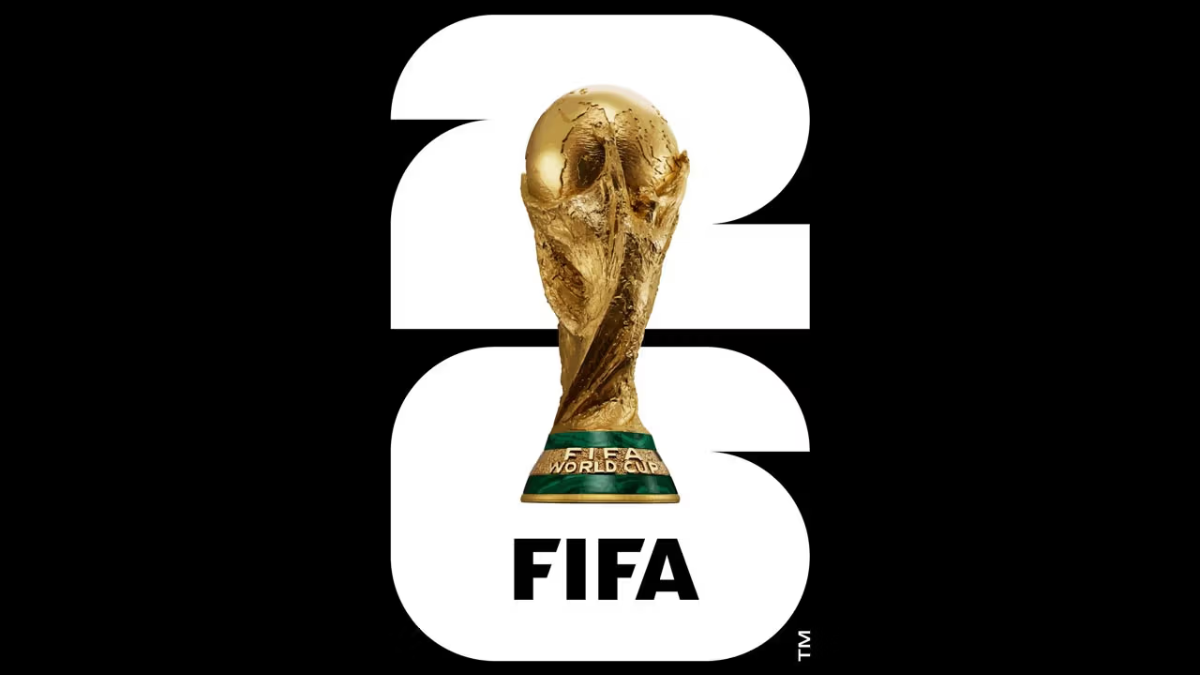
The FIFA World Cup is back, bigger than ever and, if you’re planning to tune in for the first time, welcome to one of the most dramatic sporting events on the planet.
For a little over a month, football will dominate conversations, timelines, living rooms, pubs, cafés and group chats around the world. The 2026 FIFA World Cup officially kicks off on June 11 in Mexico City and concludes with the final on July 19 in New Jersey, with matches spread across Canada, Mexico and the United States.
Whether you’re a complete newcomer or someone who’s only ever caught the occasional viral goal on social media, here’s everything you need to know before the world’s biggest sporting spectacle begins.
First Things First: Why Is The World Cup Such A Big Deal?
Quite simply, there is nothing else like it.
The World Cup is football’s ultimate prize, held once every four years and contested by the best national teams on earth. Players spend entire careers dreaming of lifting the trophy, while fans often wait years for another chance at glory after heartbreak.
This year’s edition is historic for another reason: it is the largest World Cup ever staged. A record 48 nations will compete across 104 matches, making it the biggest tournament in FIFA history.

How Does The Tournament Work?
The expanded format means 48 teams have been divided into 12 groups of four. Each team plays three group-stage matches.
The points system is straightforward:
- Win = 3 points
- Draw = 1 point
- Loss = 0 points
Once all group matches are completed, the top two teams from each group automatically qualify for the knockout rounds. They are joined by the eight best third-placed teams, creating a 32-team knockout bracket.
From there, it’s simple: win and advance, lose and go home.
The knockout path looks like this:
Round of 32 → Round of 16 → Quarter-finals → Semi-finals → Final
If a knockout match ends level after 90 minutes, teams play 30 minutes of extra time. If there’s still no winner, it all comes down to one of football’s most nerve-racking spectacles — a penalty shootout.
Understanding The Basics Of Football
Football’s global appeal lies in how easy it is to understand. Two teams of 11 players take the field with one objective: score more goals than your opponent by putting the ball into the net.
Each match lasts 90 minutes, split into two 45-minute halves, with a 15-minute break at half-time before the action resumes. Unlike many sports, the clock never stops. Instead, referees add “stoppage time” at the end of each half to account for injuries, substitutions and other delays.
Referees can also issue cards:
- A yellow card serves as a warning.
- Two yellow cards equal a red card.
- A red card means immediate dismissal, leaving the player’s team with one fewer player on the field.
That’s really all you need to know to start enjoying a match.
Where Is The World Cup Being Played?
For the first time, three countries are sharing hosting duties.
Mexico:
- Mexico City
- Guadalajara
- Monterrey
Canada
- Toronto
- Vancouver
United States
- Atlanta
- Boston
- Dallas
- Houston
- Kansas City
- Los Angeles
- Miami
- New York/New Jersey
- Philadelphia
- San Francisco Bay Area
- Seattle
The opening match takes place in Mexico City, while the final will be staged at MetLife Stadium in New Jersey.
Who Are The Favourites?
Every World Cup begins with a handful of contenders and 2026 is no different.
France enter the tournament with one of the deepest squads in international football. Led by Kylian Mbappé and supported by stars such as Ousmane Dembélé, Les Bleus are once again expected to challenge for the title.
Spain arrive with momentum and one of the most exciting young generations in the sport. Much of the spotlight will fall on teenage sensation Lamine Yamal, who continues to establish himself as one of football’s brightest talents.
England, despite recent near misses in major finals, are also among the leading contenders, while Brazil will once again carry the weight of expectation as the most successful nation in World Cup history.
The five-time champions are still chasing a first World Cup triumph since 2002.
Defending champions Argentina cannot be overlooked either, particularly with Lionel Messi likely making what could be his final appearance on football’s biggest stage.
The Players Everyone Will Be Watching
Every World Cup creates new stars, but a few names are already guaranteed to dominate headlines.
Kylian Mbappé remains one of football’s defining figures and is chasing another World Cup title after winning in 2018 and reaching the final again in 2022. Spain’s Lamine Yamal, meanwhile, is viewed as one of the game’s next global superstars and could become one of the breakout faces of the tournament.
Then there are the legends. Lionel Messi and Cristiano Ronaldo have shaped football’s modern era for nearly two decades. Both are now in the latter stages of their careers, making this tournament feel particularly significant.
Elsewhere, fans should keep an eye on:
- Vinícius Júnior (Brazil)
- Neymar (Brazil)
- Jude Bellingham (England)
- Christian Pulisic (USA)
- Alphonso Davies (Canada)
- Son Heung-min (South Korea)
- Antoine Semenyo (Ghana)
- Erling Haaland (Norway)
The Newcomers Making History
One of the most fascinating stories of the expanded format is the number of nations making their World Cup debut.
Curaçao will become the smallest nation ever to qualify for a World Cup, with a population of around 156,000. Cape Verde will also make its first appearance, continuing a remarkable rise for the island nation.
Jordan arrives at its maiden World Cup after years of steady progress, while Uzbekistan finally breaks through after several near misses in previous qualification campaigns. For many fans, these stories often become just as memorable as the tournament favourites.
Matches With Bigger Stories Behind Them
Every World Cup produces its own set of storylines, and 2026 already has plenty.
France’s meeting with Senegal will inevitably revive memories of one of the tournament’s most famous upsets, when Senegal stunned the defending champions in their World Cup debut back in 2002. England and Ghana are also set to meet in a fixture that adds another intriguing chapter to the nations’ international football history.
Elsewhere, Haiti’s return to the World Cup for the first time since 1974 is one of the feel-good stories of the tournament. Their group-stage clash with Scotland, who are appearing at their first World Cup in nearly three decades, will mark a significant occasion for both nations.
For newcomers, these are the moments that make the World Cup different. It’s not just about the favourites or the biggest stars. Every tournament produces surprise results, breakout players and stories that capture the attention of fans around the world.
And that’s ultimately what makes the World Cup special.
Over the course of five weeks, the sport’s biggest names share the stage with nations chasing history, debutants living a dream and underdogs hoping to pull off the impossible. Whether you’re tuning in for the first time or have followed football for years, there is always a story waiting to unfold.